
“The Great Controversy,” pp. 322, 323, teaches that “not until the personal advent of Christ can His people receive the kingdom….But when Jesus comes, He confers immortality upon His people; and then He calls them to inherit the kingdom of which they have hitherto been only heirs.” Will you please help harmonize the Bible and “The Shepherd’s Rod” with these and other passages in Sister White’s writings in regard to the setting up of the Kingdom?
Answer:
Although the doctrine of the Kingdom may not appear quite so complete under the lens of Sister White’s writings as under the lens of the Rod, one dare not thus superficially reject either, but must the more studiously compare both views of the doctrine under the super-lens of the Bible. He must keep in mind that we are not given license to harmonize the Bible with any other writings, but are charged to measure all others by It.
First of all, in order to do justice to the Scriptures, to Sister White’s writings, and to the Rod the position of each on the subject must be viewed in the light of the Scriptures, which incontrovertibly teach that the Promised Land will be reinhabited by the Lord’s own converted people. (See Isaiah 2; Micah 4; Ezekiel 36, 37; Jeremiah 31-33).
As to Sister White’s statement in The Great Controversy, she is there speaking of the Kingdom complete, after the dead are raised, at the time the saints receive it. This was the only phase of the subject-the consummate phase that Providence had made known when she wrote. Now as the scroll of prophetic Truth has unrolled further since her day, the Kingdom in reality is seen to have an intermediate, Davidian phase, as well as the final one heretofore known.
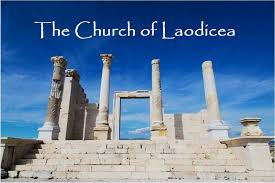
Besides the prophecies relating to the literal—the Davidian—Kingdom, the Bible contains many other prophetic subjects which the writings of Sister White do not even mention, let alone treat of. And if the Lord does not now reveal them to the church to meet her need today, she will not be prepared for their fulfillment, but will be left to perish in her undone Laodicean condition. These prophecies must therefore be revealed in order to strengthen the church in her final warfare. Otherwise, for what purpose were they written?
No prophet of God has ever forged a complete prophetic chain of events, with no links missing. It has taken many inspired writers to complete the long chain of prophecy. The mind, therefore, which takes the position that Sister White has done what no prophet in or out of the Bible has ever done, does so at the utter disregard of actual Biblical procedure and also of revealed Truth.
She herself says that “no man, however honored of Heaven, has ever attained to a full understanding of the great plan of redemption, or even to a perfect appreciation of the Divine purpose in the work for his own time. Men do not fully understand what God would accomplish by the work which He gives them to do; they do not comprehend, in all its bearings, the message which they utter in His name.”-The Great Controversy, p. 343.
Some persons, being of the parrot kind, utter parrot-like statements, never stopping to think what they say, and seemingly never caring whether their statements stand or fall. Such are they who say that no other event or events can come before, between, or after those set forth in Sister White’s writings.
Should one insist that the continuity of events recorded in Early Writings, pp. 15-17, must be taken as absolute, and that no other event or events can be sandwiched in, then he is getting himself into deep water, for the pages mentioned in no wise even intimate either the seven last plagues or the millennium!
Again: the Jews rejected the Lord because not all of what the prophets taught and wrote was found in the teachings of Moses. “We know,” they said, “that God spake unto Moses: as for this fellow, we know not from whence He is.” John 9:29.
As no prophet’s writings ever predicted the entire Truth needed by the church to carry her clear through to the Kingdom, and as other prophets followed, either enlarging upon or adding to the prophecies already recorded in the Scriptures, then for anyone to turn down the good tidings of the Kingdom on the grounds that this phase of the Kingdom is not found in Sister White’s writings, is for him to take the same inexcusable and fatal stand as did the Jews. It is to say, “I am rich and increased with goods, and have need of nothing.” Rev. 3:17. It is this attitude that compels God to spue out of His mouth the lukewarm, satisfied Laodiceans.
The eleventh-hour message has been timed and designed to reveal the Davidian Kingdom rising a new before the appearing of Christ in the clouds. Having no direct light, however on this phase of the Kingdom, The Great Controversy could no more have expressed itself in the definite terms which the message today uses, than could William Miller have expressed himself on the subject of the cleansing of the sanctuary, in such terms as we read in The Great Controversy.
Of necessity, any statements relative to a subject which is still out of sight in the unfolding of the Scroll, are made only in incidental terms of truth as it is at the time seen or commonly understood. And if the common understanding of these incidental statements be wrong, the writer cannot be held responsible for that which he has borrowed from others or seen but very dimly and therefore expressed very indefinitely.
For example, in Christ’s day “the doctrine of a conscious state of existence between death and the resurrection was held by many of those who were listening to Christ’s words. The Saviour knew of their ideas, and He framed his parable so as to inculcate important truths through these preconceived opinions. He held up before His hearers a mirror wherein they might see themselves in their true relation to God. He used the prevailing opinion to convey the idea He wished to make prominent to all….”—Christ’s Object Lessons, p. 263.
This circumstance is natural and common to every writer treating of Present Truth, beginning with the Old Testament writers, and continuing ever since, and will thus be until every component part of the Truth is made known. This is borne out in the work of John the Baptist. He was to proclaim, not the setting up of the Kingdom, but the coming of the King. But in announcing the one, he incidentally had to answer questions concerning the other. When speaking of the coming King, he expressed himself in terms of revealed Truth. But when circumstantially alluding to the coming Kingdom, on which there was no special light in his day, he necessarily expressed himself in terms of the doctrines as then commonly understood.
Nevertheless, when the further unrolling of the scroll revealed that the Kingdom was not to be set up at that time, then the honest, truth-seeking ones did not accuse either John or Christ, but joyously watched the scroll unfold, and jubilantly marched on with the Truth. Not so, though, with the vast majority of the Jews. Their pride of opinion, forbidding them to forgo their errors and to embrace advancing Truth, led them deeper into error.
“Thus it was,” says the Spirit of Prophecy, “that the Jews did in the days of Christ, and we are waned not to do as they did, and be led to choose darkness rather than light, because there was in them an evil heart of unbelief in departing from the living God.”-Testimonies on Sabbath-School Work, p. 66; Counsels on Sabbath School Work, p. 30.
So The Great Controversy and Early Writings make the subject of the Kingdom just as clear as the partial unrolling of the scroll permitted the writer to view it, in only one of its phases, at the time she wrote both books.
While The Great Controversy may omit showing that the establishment of the Kingdom and the inheriting of it are two different events, elsewhere the Spirit of Prophecy does do so: While the apostles, it says, “were not to behold the coming of the kingdom in their day, the fact that Jesus bade them pray for it, is evidence that in God’s own time it will surely come.
“The Kingdom of God’s grace is now being established, as day by day hearts that have been full of sin and rebellion yield to the sovereignty of His love. But the full establishment of the kingdom of His glory will not take place until the second coming of Christ to this world. ‘The kingdom and dominion, and the greatness of the kingdom under he whole heaven,’ is to be given to ‘the people of he saints of the Most High.”’-Mount of Blessing, p. 159.
Every Christian should remember that as the Truth is ever-advancing It will not be found today where It was yesterday and that therefore Christ’s followers must advance with It. They will not follow the examples of the Jews and the Romans.
When Moses wrote the first part of the Bible, he was not given all the light which God intended to reveal to His people through the ages. With each approaching hour for the Truth to advance, came first one prophet, then another, in a long succession ending with John the Baptist. Then came Christ the apostles, the reformers, William Miller and Sister White, each one in turn teaching truths which could not be borne out entirely by the writings of any one predecessor. To find all the Truth thus progressively revealed, the writings of all must be collaborated.
For instance, in setting forth the law of the Passover, and in commanding its observance Moses wrote: “Your lamb shall be without blemish, a male of the first year: ye shall take it out from the sheep or from the goats: and ye shall keep it up until the fourteenth day of the same month: and the whole assembly of the congregation of Israel shall kill it in the evening.” Ex. 12:5, 6.
The reason which Moses assigns for the Passover observance is that it is to commemorate Israel’s going out of Egypt (Deut. 16:1-3). John the Baptist, however, imputes its significance to the coming of Christ, “the Lamb of God” (John 1:29), while the apostles assign it to His crucifixion: “For even Christ our passover,” says Paul, “is sacrificed for us.” 1 Cor. 5:7. And the significance of keeping the Passover, he then attaches to the ordinance of the Lord’s supper (1 Cor. 11:26).
Similarly, Moses did not explain that the Levitical priesthood in the earthly sanctuary (Ex. 40:15) was only a provisional and thus a temporary one, a figure of Christ’s priesthood in the heavenly sanctuary, as the apostles explained (Heb. 6:19, 20; 9:12, 26).
Failing to advance with the advancing Truth, each generation of Jews found fault with its respective prophets, culminating with the apostles and the very Son of God Himself. The Jews justified their criminal actions on the ground that the claims of their prophets, of Christ, and of the apostles, were not founded upon Moses’ writings. So while boasting of Moses’ writings, they denied and killed the prophets who came after him—a solemn warning to us, lest doing as they did, we meet their fate!
The main question therefore is not as to whether Sister White’s or Moses’ or this one’s or that one’s writings contain all the messages for this day, but rather simply as to whether they are found in, and supported by, the Bible.
The Rod consequently does not claim that its message is found in its entirety in the writings of any one particular prophet, but rather in the writings of all the prophets—“here a little, and there a little.” Isa. 28:13.
Let none, therefore, treacherously use Sister White’s writings, as the Jews used Moses’ writings, against the advance of Truth, and to their own eternal hurt. From every angle approached, the Bible clears the subject of the Kingdom, making impossible one’s erring if he follows precisely what the Word says concerning it.
The Rod does not teach either that Jerusalem is to be rebuilt, or that it is not to be rebuilt, as the capital city of the Kingdom, but only that the Kingdom in its beginning is to be set up in the Promised Land. And in confirmation of this truth, Ezekiel prophesies of
A New Division of The Land.
The prophet presents a division of the land entirely different from that in Joshua’s time (Josh. 17): it is to be in strips from the east to the west; Dan is to have the first portion in the north, and Gad, the last portion in the south between the borders of these two are to be the portions of the rest of the tribes; the city is to be in the midst of the land (Ezek. 48).
The fact that such a division of the Promised Land has never been made, shows that it is yet future. Also the fact that the sanctuary is to be there, whereas it is not to be in the earth made new (Rev. 21:22), again proves that this unique setup is pre-millennial.
In addition, the twofold fact that the name of the city is “The Lord is There,” and that its location, according to the division of the land, necessarily must in some respects be different from that of old Jerusalem, shows that Jerusalem of today, the city proper, may not at all be rebuilt as a capital city of the coming Kingdom. (See Tract No. 12 The World Yesterday, Today, Tomorrow, 1941 Edition, pp. 52, 53).
If the Bible makes Itself clear on any subject It certainly does so on the subject of the Kingdom. And rightly so, for the Kingdom is the Christian’s crowning hope,
Satan’s Constant Target, the People’s Repeated Stumbling Block.
That the great controversy between Christ and Satan is over this crowning hope, the Kingdom, is seen from the Lord’s repeated instructions in the prophecies, in the types, and in the parables; from Satan’s constant effort to keep the human race out of it; and last, from human beings repeatedly being defeated in their warfare to become heirs of it.
Working determinedly from the beginning to plunge all humanity into hell, Satan conceived his major strategy of misleading them concerning the Kingdom. He succeeded with most of the Jews because they wanted the Kingdom set up before its appointed time or not at all. And he is succeeding with many of the Laodiceans today because now, when the time appointed actually has come, they want to have it later or not at all! What a paradox! What an irony! Indeed, as history repeats itself, so does folly!
The Bible says: “In the days of these kings [the kings that are symbolized by the ten toes of the great image] shall the God of heaven set up a kingdom, which shall never be destroyed. …It shall break in pieces and consume all these kingdoms.” Dan. 2:44.
Observe that “the stone” (the Kingdom) does not become a great mountain until after it smites the image, showing that the Kingdom begins in its infancy with only the first fruits, who soon stand on Mount Zion with the Lamb, and who later, after they have garnered in the second fruits of the living, smite the nations; finally there come from the grave the saved of all ages fully to make up the “great mountain”—the Kingdom complete!
In the face of these clear-cut and repeatedly chronicled prophecies, may no one be so foolish as to say, as did the Jews in response to Ezekiel’s prophecies, “The vision that he seeth is for many days to come, and he prophesieth of the times that are far off” (Ezek. 12:27), thereby bringing upon his head the same dreadful doom.” (Answerer, vol. 2, Question 42)
 Godsloveandlaw's Blog